By Olive Higbee February 26, 2025
Rebellion in fashion is rarely new. It is simply renamed.
Every generation believes it has invented the bad girl. The scandalous one. The improper one. The woman whose hemline is too high, whose lipstick is too dark, whose silhouette is too loud. But if we trace her carefully, we find she has always existed, moving through history like a recurring constellation.
The rebellious woman does not disappear.
She returns.
The Victorian Era
In the nineteenth century, she emerged quietly.
Once dismissed as “Turkish trousers,” bloomers marked a subtle but radical shift in Victorian dress. The garment featured a billowing wide leg pant gathered at the ankle, designed to allow greater freedom of movement while still conforming, at least outwardly, to prevailing modesty standards. The gathered ankle was practical rather than decorative. It prevented fabric from catching on machinery, carriage steps, and the exposed mechanics of early bicycles.
As cycling grew in popularity during the late nineteenth century, traditional floor length skirts became not only impractical but dangerous. Long hems tangled easily in gears and wheels. Bloomers offered a solution. For the first time, a widely discussed garment prioritized mobility and physical safety over ornamental spectacle.
So called bloomer costumes often paired the trousers with a shortened knee length jacket layered over a modest skirt. Even in rebellion, compromise was required. The silhouette gestured toward liberation while still negotiating propriety.
The Victorian era, associated with Queen Victoria’s reign from 1837 to 1901, was defined by industrial expansion, imperial dominance, and rigid social hierarchy. Textile production accelerated through mechanization. Global trade introduced silks, dyes, and foreign materials into mainstream fashion at unprecedented speed. Technological innovation reshaped daily life.
Yet women’s clothing remained structurally restrictive.
Corsets compressed the torso. Petticoats limited stride. The silhouette prioritized decorum over autonomy. The female body was ornamental, not mobile.
Against this backdrop, the bloomer was quietly subversive. It did not dismantle hierarchy or erase modesty codes. But it introduced a radical premise: clothing could serve the welfare of the wearer rather than merely her appearance.
The rebellious Victorian woman did not bare her legs.
She altered the architecture beneath them.
And in her time, that was scandal enough.

The 1920s Flapper
By the 1920s, rebellion no longer hid beneath layers.
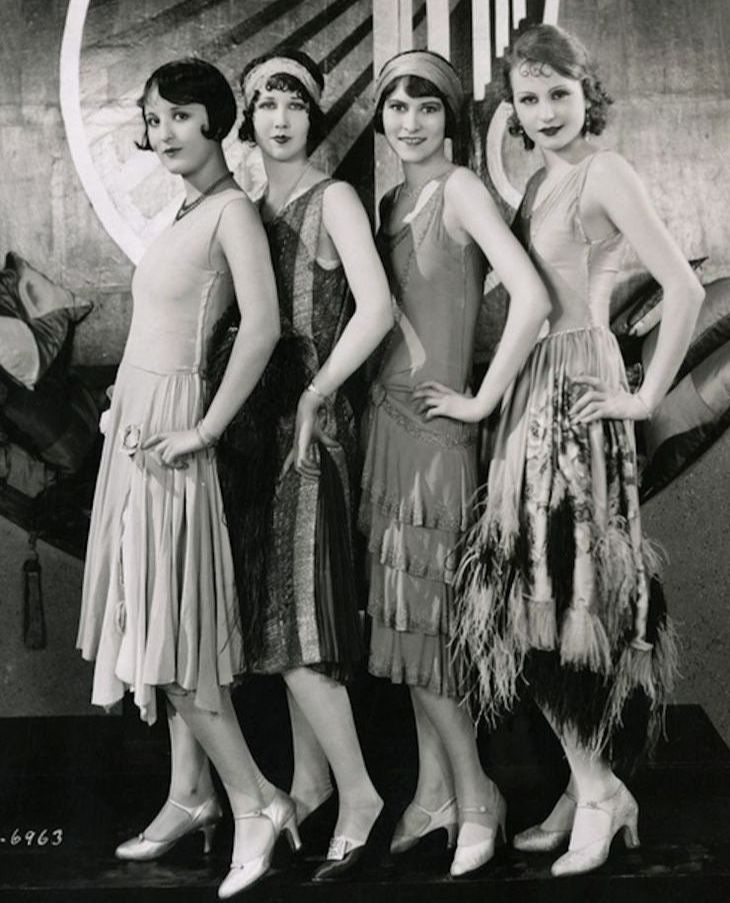
The word flapper originally described a young bird attempting flight, wings beating urgently against the air. Early twentieth century British publications used the term for spirited young women on the verge of independence. The definition we recognize today solidified after the First World War, aided by popular culture and the 1920 film The Flapper.
If the Victorian rebel changed what lay beneath her skirt, the flapper changed the outline entirely.
She cut her hair.
The blunt bob stood in stark contrast to the preceding ideal of the Gibson Girl, whose long hair was swept into elaborate updos that signified virtue and discipline. For centuries in Western culture, long hair symbolized femininity and morality. Short hair was coded masculine or deviant.
The First World War disrupted that structure. As women entered the workforce in unprecedented numbers and materials became scarce, elaborate grooming became impractical. The bob was efficient. Modern. Unencumbered.
But it was also symbolic.
By cutting her hair, the flapper severed a visual shorthand for obedience. She smoked publicly, danced freely, and shortened her hemlines. She chose movement over myth.
The rebellious woman had returned.
This time, she reshaped femininity itself.
The 1950s Rockabilly Rebel
After the upheaval of war, the 1950s attempted to restore order.
Domesticity was idealized. Suburbs expanded. Femininity was polished and contained. The ideal woman was soft, smiling, and cinched at the waist.
But rebellion did not disappear. It intensified.
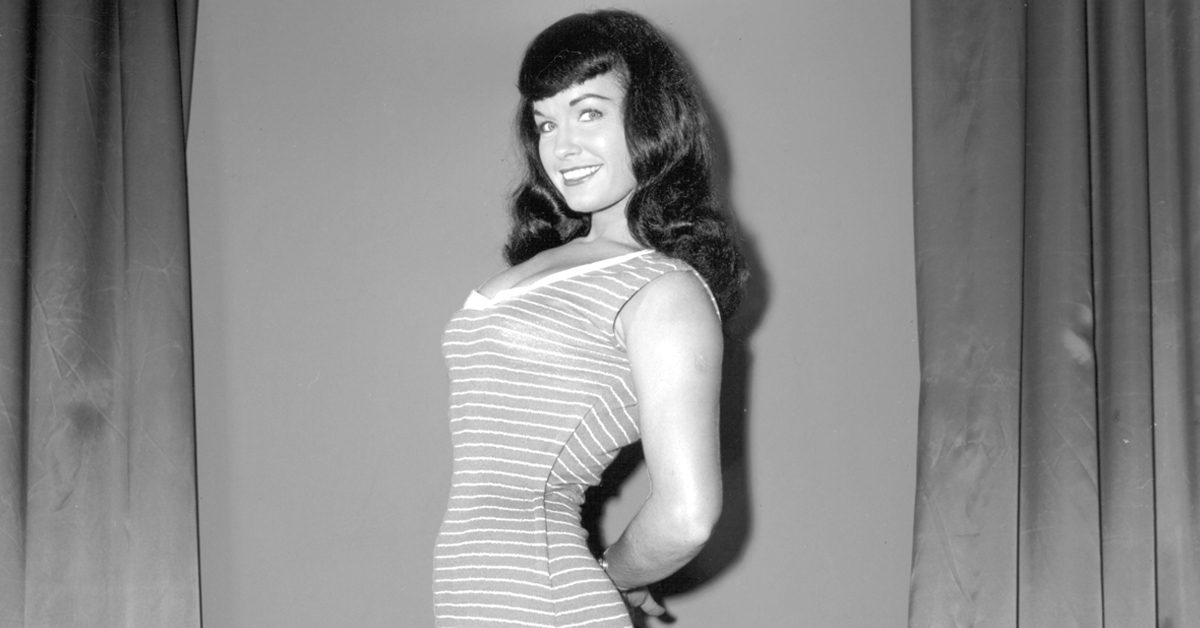
The 1950s bad girl did not reject femininity. She exaggerated it. Pencil skirts tightened. Sweaters clung closer. Red lipstick deepened. The hourglass figure became theatrical.
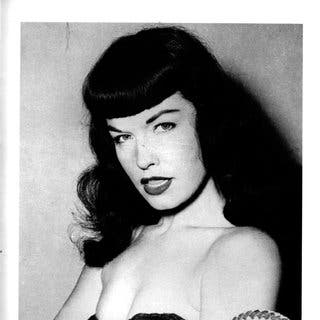
Figures like Marilyn Monroe embodied hyper femininity that was too luminous to ignore. Meanwhile, Bettie Page blurred the line between fantasy and agency, her direct gaze unsettling precisely because it was unashamed.
Outside Hollywood, rockabilly culture added edge. Leather jackets entered women’s wardrobes. Cat eye liner sharpened expressions. These women borrowed from masculine codes without surrendering softness.
If the flapper modernized femininity, the 1950s rebel weaponized it.
She would be seen.
And she would enjoy it.

The 1970s Punk Rupture
By the 1970s, rebellion stopped negotiating.
Economic decline and political distrust fueled a generation that rejected inherited promises. Punk did not want to be pretty.
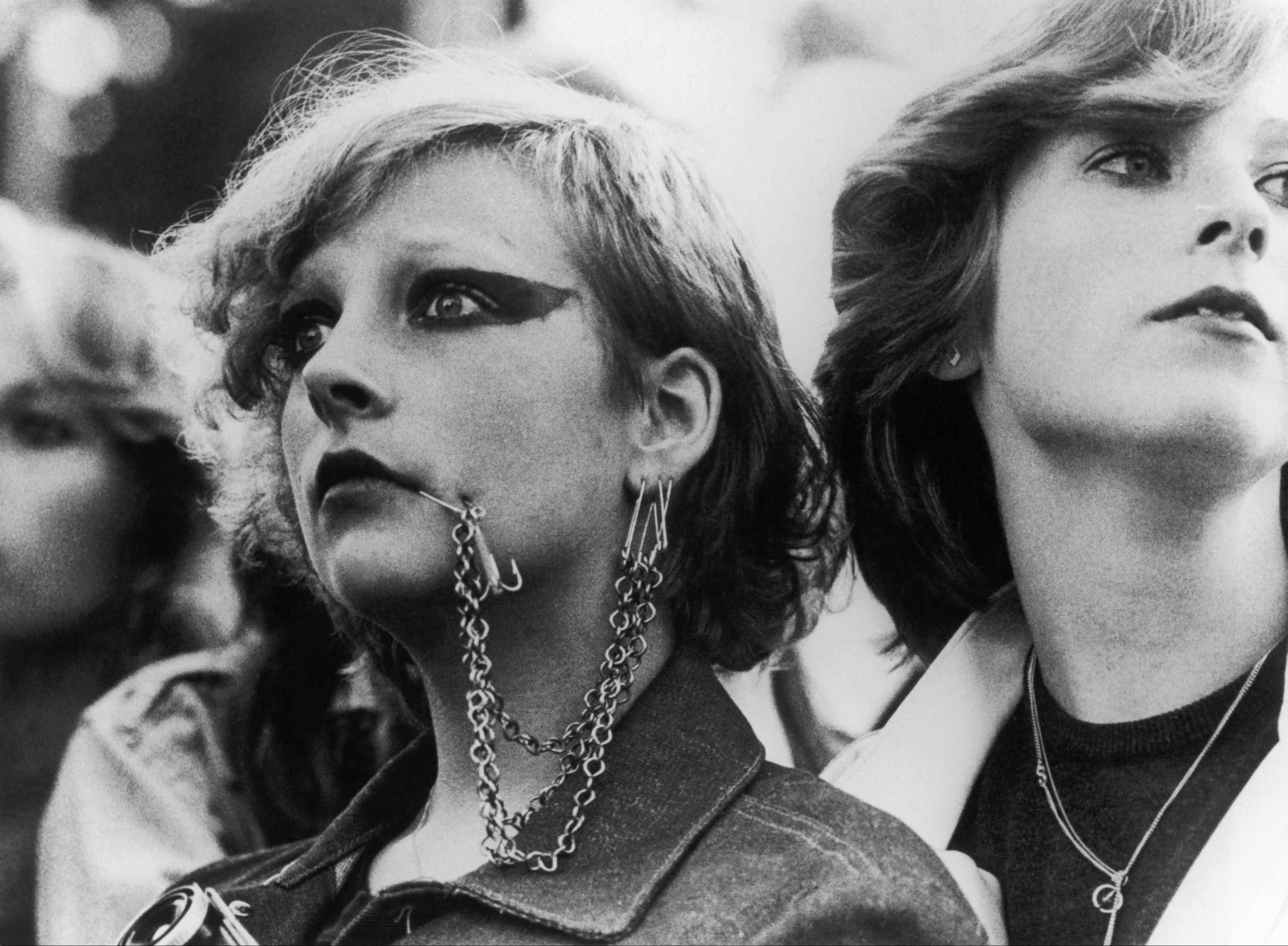
Bands like Sex Pistols turned anger into soundtrack. Designer Vivienne Westwood transformed sedition into clothing. Ripped fabric, safety pins, bondage trousers. Clothing became confrontation.
Women like Siouxsie Sioux wore smeared eyeliner like armor. Hair was shaved or sculpted into defiance. The body was no longer softened for approval. It was sharpened.
If Victorian fashion restrained, and flappers modernized, and bombshells seduced, punk refused the premise altogether.
It distorted the gaze rather than pleasing it.
And yet, even punk would eventually be commodified.
Rebellion became aesthetic once more.
The Modern Day
And now, in 2025, rebellion exists everywhere and nowhere at once.
She is the hyper polished baddie in bodycon and contour. She is alt and undone. She is coquette in ribbon and lace. Each aesthetic is marketed as individuality, packaged for algorithms and consumption.
But is she rebelling, or performing rebellion within a system that profits from it?
Fashion has always framed the bad girl as spectacle. Historically, her silhouette signals something deeper: a shift in economics, power, or social anxiety. When systems tighten, hemlines rise. When conformity intensifies, aesthetics fracture.
The scandalous woman is not chaos.
She is a barometer.
And like any celestial body, she moves in cycles, disappearing from view only to return renamed, reframed, and ready to unsettle the sky once more.

This now reads as one continuous thesis with escalating tension and clean transitions.
If you want, we can now refine the modern section to feel sharper and more specific to 2025 culture, especially if your audience is Gen Z and chronically online.
Sources & Further Reading
• The Victoria and Albert Museum Archives
• British Library digital collections
• The Metropolitan Museum of Art Costume Institute
• The New York Times archives
• The film The Flapper (1920)
A note from Olive…
Thank you for taking your time to read this. This is my first blog post of what is hopefully one of many more to come. Feel free to leave your commentary, this is a safe space. Let me know if there’s any topics you’d like me to cover, and thank you for joining me on my fashion journey.
 stardust and lace
Leave a comment