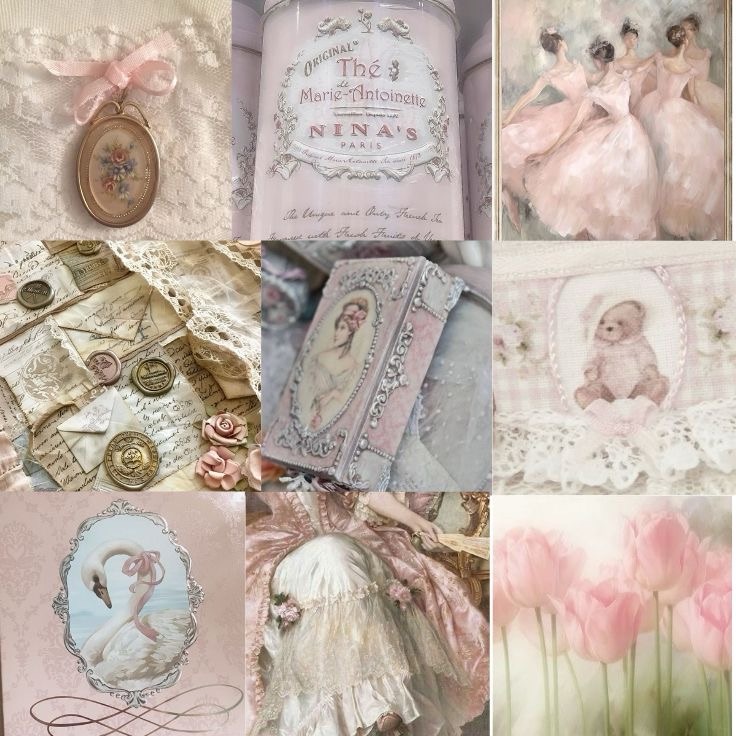
There is a reason pearls resurface every few decades, why powdered silhouettes and pastel palettes refuse to disappear. Romantic aesthetics do not appear randomly. They rise when culture feels harsh. They resurface when the world feels metallic and overexposed, when everything is optimized and nothing feels touched by hand.
But if we are going to drape ourselves in bows and call it rebellion, we need to understand the inheritance fully.
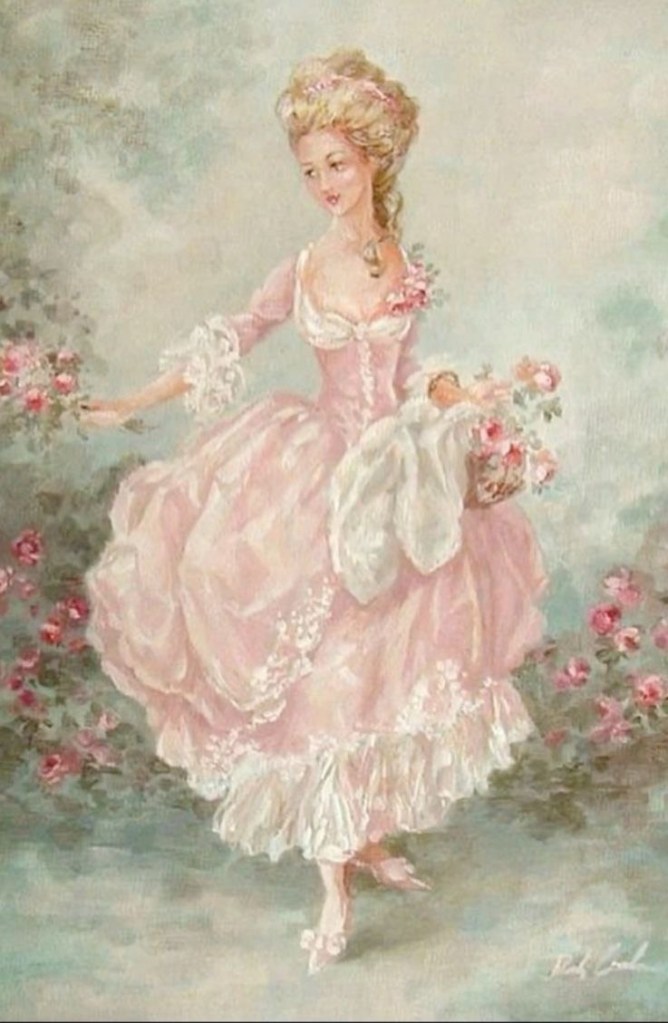
Rococo was not only softness. It was spectacle. It was indulgence. It was fantasy at the edge of collapse.
And that complexity lives on in today’s coquette aesthetic whether we acknowledge it or not.
The Original Rococo: Pleasure in a Precarious World
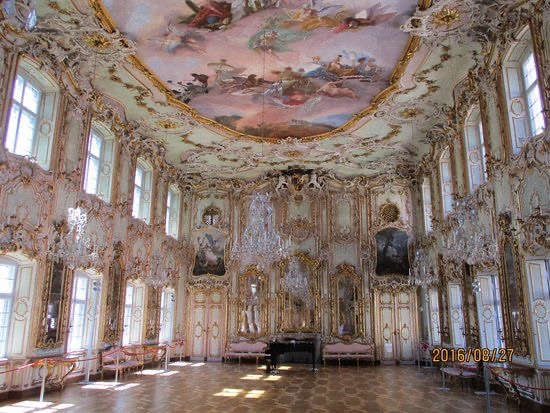
The Rococo movement emerged in early eighteenth century France as a reaction to the heavy grandeur of Baroque absolutism. Where Baroque architecture and art were monumental and imposing, Rococo turned inward. It became intimate, decorative, pastel, curved. Rooms softened. Paintings lightened. Ornamentation bloomed across ceilings and walls like gilded vines.
Under the reign of Louis XV and later the famously aestheticized Marie Antoinette, aristocratic culture embraced leisure as performance. Interiors were layered with mirrors, silk, carved wood, and gold leaf. Paintings by artists such as François Boucher depicted mythological lovers with porcelain skin and idyllic pastoral scenes untouched by labor or hardship.
Rococo celebrated flirtation, romance, pleasure, and decorative femininity. It was playful and sensual. It was light in palette and heavy in symbolism.
But it existed inside a society marked by severe class inequality. While aristocrats curated elaborate salons and private fantasies, France faced economic instability, food shortages, and rising public resentment. The ornamental excess of the elite became a visual representation of detachment from reality.
When the French Revolution erupted, Rococo did not simply fall out of fashion. It became politically charged. Ornament was no longer neutral. It was evidence.
The powdered fantasy could not survive social collapse.
The Problematic Undercurrents
To romanticize Rococo without context is to romanticize a system built on imbalance. The luxury goods that defined the era were supported by colonial trade networks. Wealth disparity was extreme. Gender roles confined women within rigid social structures even as they were celebrated visually.
Women in aristocratic circles were often admired for beauty and charm while remaining limited in agency. Femininity was aestheticized but constrained. The same society that adored Marie Antoinette’s gowns ultimately used her image as a symbol of excess and moral decay.
Rococo femininity was soft, but it was not free. It was curated within strict boundaries. Its beauty was real. Its privilege was also real.
And this is where the modern conversation begins.
Coquette: Softness in the Age of Algorithms
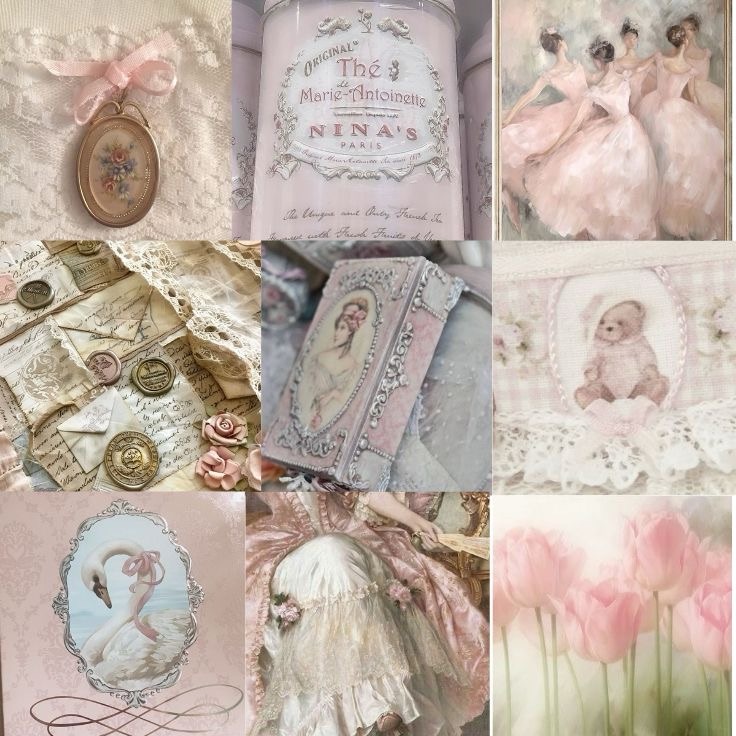
Today’s coquette aesthetic borrows openly from Rococo’s visual language. Blush tones, pearls, ribbons, lace, powdered silhouettes, and a kind of pastoral nostalgia all echo eighteenth century romanticism.
But coquette shrinks the scale.
Where Rococo unfolded in palaces and salons, coquette unfolds in bedrooms and cafés. Instead of courtly spectacle, we see journal pages, lip gloss in soft lighting, intimate rituals. The grandeur becomes miniature. The palace becomes personal.
Coquette reframes ornamental femininity as emotional experience. It asks how do I want to feel rather than how do I want to impress.
And yet, it carries echoes of its ancestry.
Coquette often romanticizes delicacy. It leans into fragility as aesthetic. It gravitates toward wealth coded imagery such as antique mirrors and heirloom pearls. It draws from European nostalgia without always acknowledging the systems that produced those aesthetics.
This does not make it inherently regressive. But it does mean that the softness we wear is historically layered.
Ribbons remember where they came from.
Modern Rococo: Artifice With Awareness
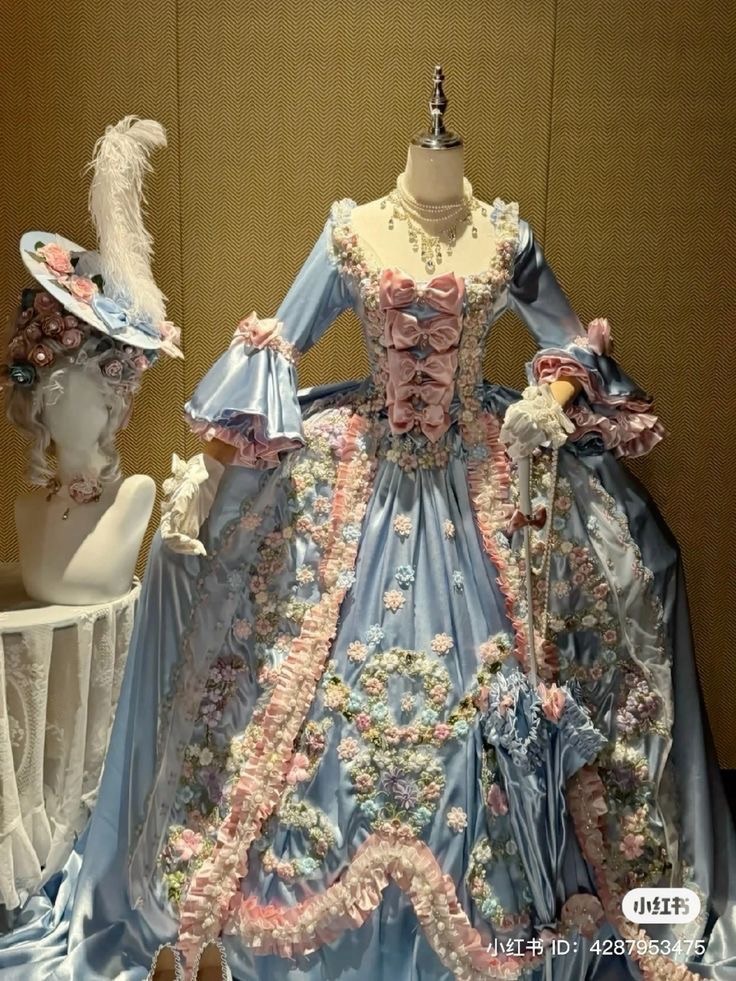
Modern Rococo, as it appears today, feels more overtly theatrical. It does not pretend the ornament is accidental. It embraces composition. Interiors are curated with intention. Outfits are layered like paintings. Pearls are worn not as quiet sentiment but as statement.
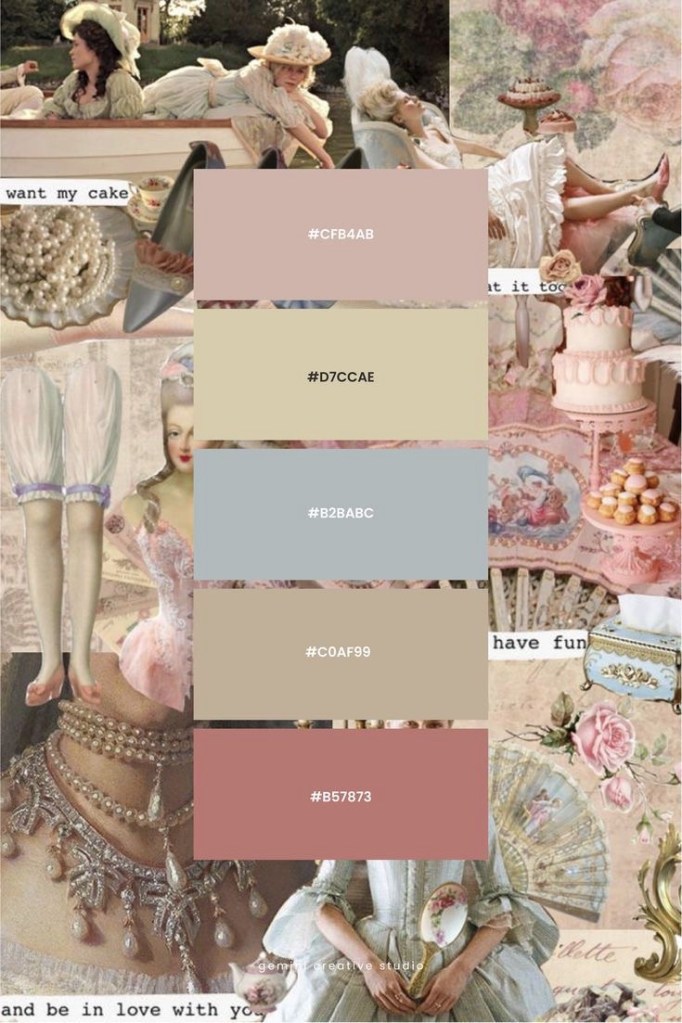
Where coquette internalizes romance, modern rococo externalizes it.
It references the era more directly. The silhouettes may be exaggerated. The textures intentionally layered. The styling deliberate enough to feel like commentary. It understands that Rococo was artifice and chooses to reinterpret that artifice consciously.
In this way, modern rococo can feel less like escapism and more like reinterpretation. It treats history as visual language rather than unexamined fantasy.
Why These Aesthetics Are Rising Now
Rococo itself emerged during instability. It was a response to political tension and social imbalance. Pleasure became a refuge for the elite. Ornament became insulation.
Today’s romantic aesthetics rise in a different but parallel climate. We live in an era of relentless productivity, algorithmic exposure, economic uncertainty, and digital fatigue. Romantic aesthetics offer sensory relief. They reintroduce texture, ritual, and atmosphere into lives flattened by screens.
The difference is accessibility.
This is not Versailles. A ribbon does not require inherited wealth. A curated bedroom does not require a palace. Pearls can be thrifted. Ornament is no longer restricted to aristocracy.
The aesthetic has been democratized.
But democratization does not erase lineage.
Wearing Romance Awake
There is nothing inherently wrong with bows. There is nothing inherently regressive about lace. Beauty is not the enemy of progress. Softness is not surrender.
The question is awareness.
When you embrace coquette softness, are you romanticizing fragility or reclaiming tenderness as strength. When you embrace modern rococo ornament, are you replicating excess or transforming it into artistic self expression.
Aesthetics are not empty. They carry memory.
The Rococo period was dazzling and detached. It was inventive and unequal. It celebrated femininity while restricting it. It turned life into art while ignoring the instability beneath its floors.
Today, we have the opportunity to choose differently.
We can borrow the ornament without the hierarchy. We can reclaim softness without shrinking ourselves. We can curate beauty without detaching from reality.
Romantic aesthetics endure because the desire beneath them is timeless. The desire to live inside beauty rather than merely observe it. The desire to create atmosphere in a world that feels mechanical.
Lace is delicate.
History is not.
And if we are going to wear romance in the present, we might as well wear it consciously.
 stardust and lace
Leave a comment